May 24, 2025
Mabamba Swamp
Share story.
Mabamba Swamp and the Shoebill: King of the Marshes
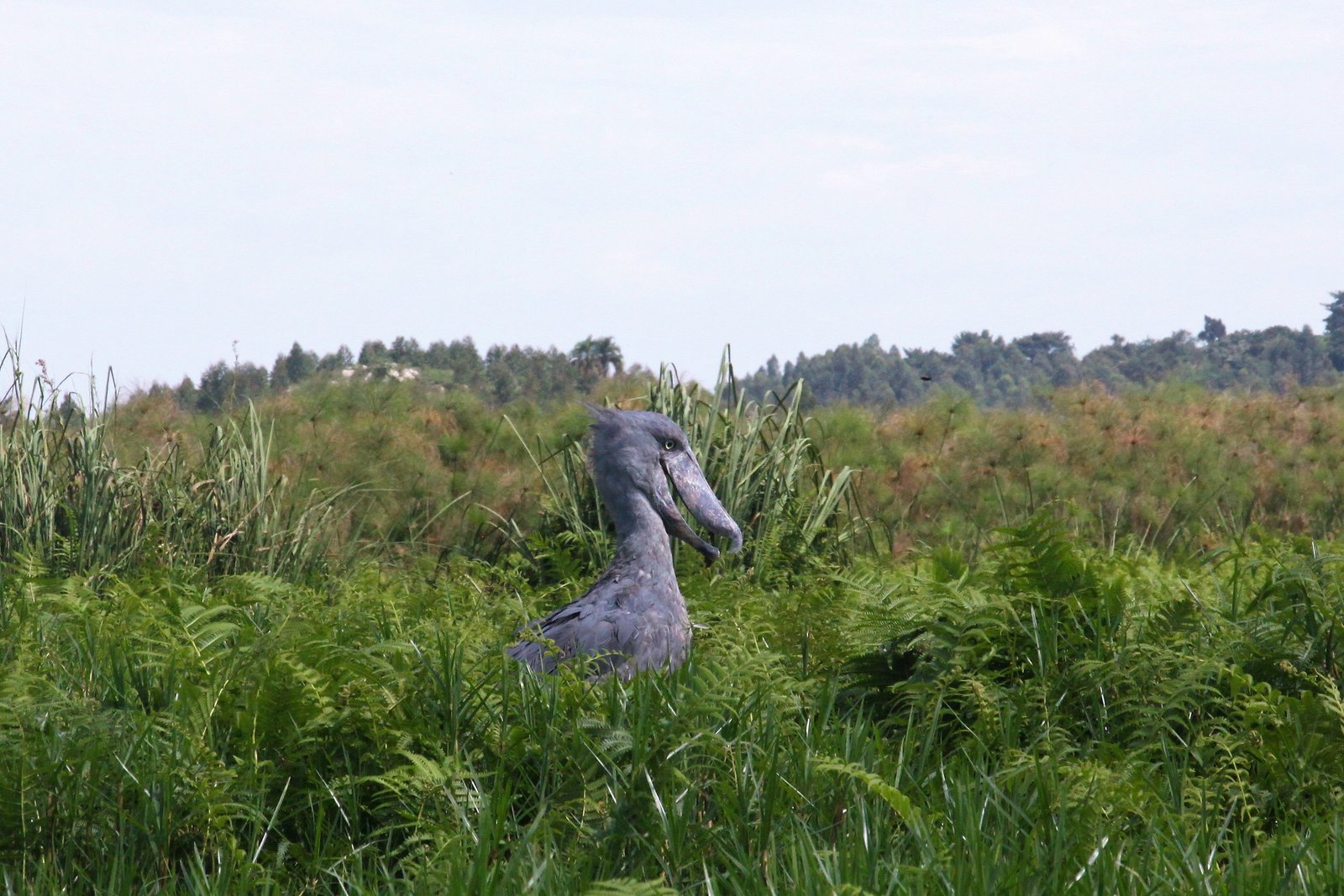
Standing in the vast Mabamba Swamp, I found myself eye-to-eye with a bird that looked as though it had stepped out of the Jurassic era. Towering and stoic, the Shoebill was impressive—but I still didn’t understand why birdwatchers placed it among the top five most sought-after birds in Africa. That was, until our local guide led us through an interpretive tour of the wetlands. By the time we were gliding back through the papyrus channels, I had joined the ranks of Shoebill enthusiasts—maybe even fanatics.
This is the Shoebill (Balaeniceps rex): a large, prehistoric-looking bird that thrives in freshwater marshes and swamps. Often called the "King of the Marshes," it commands attention with its sheer size and eerie stillness. I eagerly adjusted my camera, snapping away, but soon realized that no photo could capture the full gravity of the encounter. I told myself the memory would suffice—but, inevitably, I reached again for the camera.
The Shoebill: A Closer Look
Taxonomy
Once classified among the storks (order Ciconiiformes) due to similarities in appearance and behavior, the Shoebill has since been reclassified. Genetic studies have placed it within the order Pelecaniformes, making it a close relative of pelicans and herons.
Description
Shoebills are among the largest birds in Africa, standing between 110–140 cm tall and weighing 4–7 kg, with males generally larger than females. Their most distinctive feature is their enormous, shoe-shaped bill—light grey with darker splotches—used to catch and crush prey.
They have massive feet to match, with the middle toe measuring up to 18.5 cm. This adaptation allows them to walk on floating vegetation while hunting. Adults are predominantly slate-grey, while juveniles show a browner plumage. Their wingspan stretches from 230 to 260 cm.
In flight, Shoebills hold their wings flat and their necks retracted, similar to herons. Their flight is slow and deliberate, flapping at about 150 beats per minute—among the slowest wingbeat rates of any bird. They seldom fly far, usually no more than 100–500 meters when disturbed.
Behavior
Patience is the Shoebill’s greatest hunting tool. It can remain perfectly motionless for extended periods before launching a rapid, lethal strike. Their diet is largely composed of lungfish (Protopterus), though they also eat frogs, snakes, young crocodiles, and even waterfowl.
Shoebills are solitary and territorial, typically foraging alone and maintaining a distance of at least 20 meters from others. Nesting pairs are monogamous during a breeding season and share parenting responsibilities—shading, guarding, and feeding the chicks. Despite laying up to three eggs, they usually rear just one chick to maturity. Fledging occurs around 105 days, and the chick begins flying at roughly 112 days. Shoebills reach sexual maturity at around three years of age.
They are sensitive to changes in their environment, especially water levels. If a nesting site becomes unstable due to flooding or drying, it is often abandoned.
Habitat and Distribution
Shoebills are found in tropical East and Central Africa, particularly in large, undisturbed swamps. Their range includes South Sudan, western Ethiopia, the Democratic Republic of Congo, Rwanda, and northern Zambia. In Uganda, the most iconic populations reside in:
- Mabamba Bay Wetland, a Ramsar site on the northern shores of Lake Victoria, about 50 km west of Kampala. It’s one of the most accessible places in the world to see Shoebills in the wild.
- Murchison Falls National Park, especially in the delta area of the Nile.
- Other wetlands such as Lake Albert, Lake Edward, and the Nile-Olweny wetlands.
These habitats are typically dominated by papyrus, sedges, and water lilies—ideal hunting grounds for Shoebills, especially due to the abundance of lungfish.
Final Thoughts
Whether you're a birding novice or a seasoned twitcher, an encounter with the Shoebill in Mabamba Swamp is unforgettable. It's more than just spotting a rare bird—it’s witnessing an ancient predator in its timeless, misty habitat. And just like that, the "King of the Marshes" will rule not only the swamp—but your memory as well.
Travel Tips: How to Plan Your Shoebill Excursion to Mabamba Swamp
Getting There
Mabamba Swamp is located about an hour’s drive (and a short boat ride) from Entebbe or Kampala, making it a perfect half-day or full-day trip. Most visitors depart from Entebbe and reach the swamp via a scenic motorized canoe ride across Lake Victoria or by road to the village of Mabamba, followed by a local canoe tour through the swamp’s narrow channels.
Best Time to Visit
The Shoebill can be seen year-round, but the best time for sightings is during the dry seasons—from December to February and June to August—when water levels are more stable and visibility is better. Early morning (6–10 AM) offers the highest chances of spotting Shoebills before the heat of the day sets in.
What to Bring
- Binoculars – Essential for birdwatching and spotting other species in the swamp.
- Camera with zoom lens – For capturing the Shoebill from a respectful distance.
- Light rain jacket or poncho – The swamp can be misty or rainy, even during dry season.
- Sun protection – Hat, sunglasses, and sunscreen are highly recommended.
- Insect repellent – Particularly in the early morning and near the water.
- Water and snacks – Especially for longer excursions.
Tour Options
- Half-day tours (3–4 hours) are ideal for those on a tight schedule.
- Full-day birding excursions can include other bird species such as papyrus gonolek, malachite kingfisher, African jacana, and pygmy goose.
- Private guided tours often offer the most flexible and informative experience. Look for certified local guides who know the swamp well and can interpret both bird behavior and the ecosystem.
Responsible Tourism Tips
- Keep a respectful distance from the Shoebill and avoid loud noises.
- Stay seated in the canoe to minimize disturbance.
- Support local conservation efforts by booking through eco-conscious operators who contribute to the preservation of Mabamba Wetland.
Similar Stories